

In Between Days
On resonance and resin

My mother-in-law died on Easter. She passed peacefully at home, not connected to machines, with her son, my husband, next to her. She was 91. She was ready to go and so she went.
Five days later and a continent away, my own mother fell. She, along with her Alzheimer’s, are still in the hospital, and they are not sure where, or why, they are.
Not knowing is most intimate, says the Zen koan.
I try to sit with this. It’s hard.
I struggled with depression as a teen and through my 20s, but last Monday I truly felt for the first time the feeling of unable to get out of bed. I let the dog out, and then back in because she was barking at jackrabbits, or nothing, just barking, and I crawled back into bed. It was a deep darkness I’ve never felt before. Is that…despair? David Whyte would have a word for it, but I didn’t. It was just…unable to move, no energy. Inert.
Not knowing is most intimate.
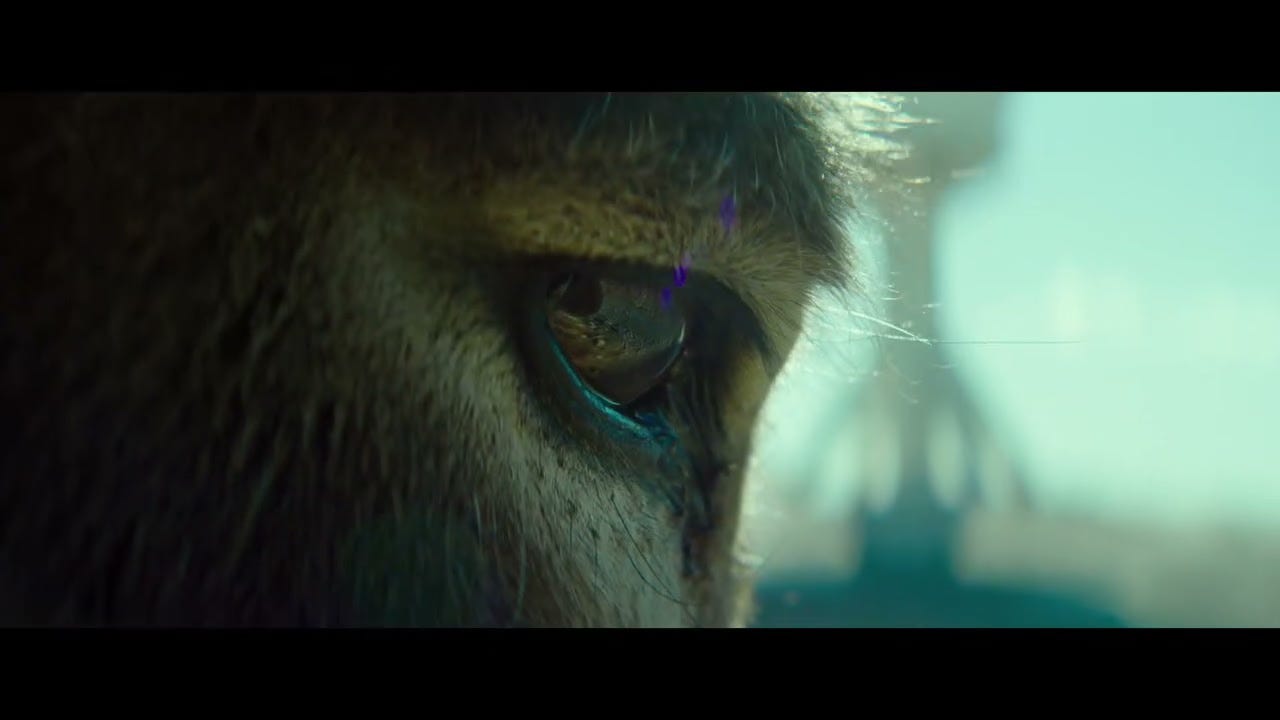
I slept. I awoke. I slept. I couldn’t read or write, so I watched. Kanopy served me a short film called perfectly a strangeness (Alison McAlpine, 2024). I saw an outline of an equid ear in the cover image and read the description:
“In the dazzling incandescence of an unknown desert, three donkeys discover an abandoned astronomical observatory and the universe. A sensorial, cinematic exploration of what a story can be.”
Three donkeys and space.
I pressed play.
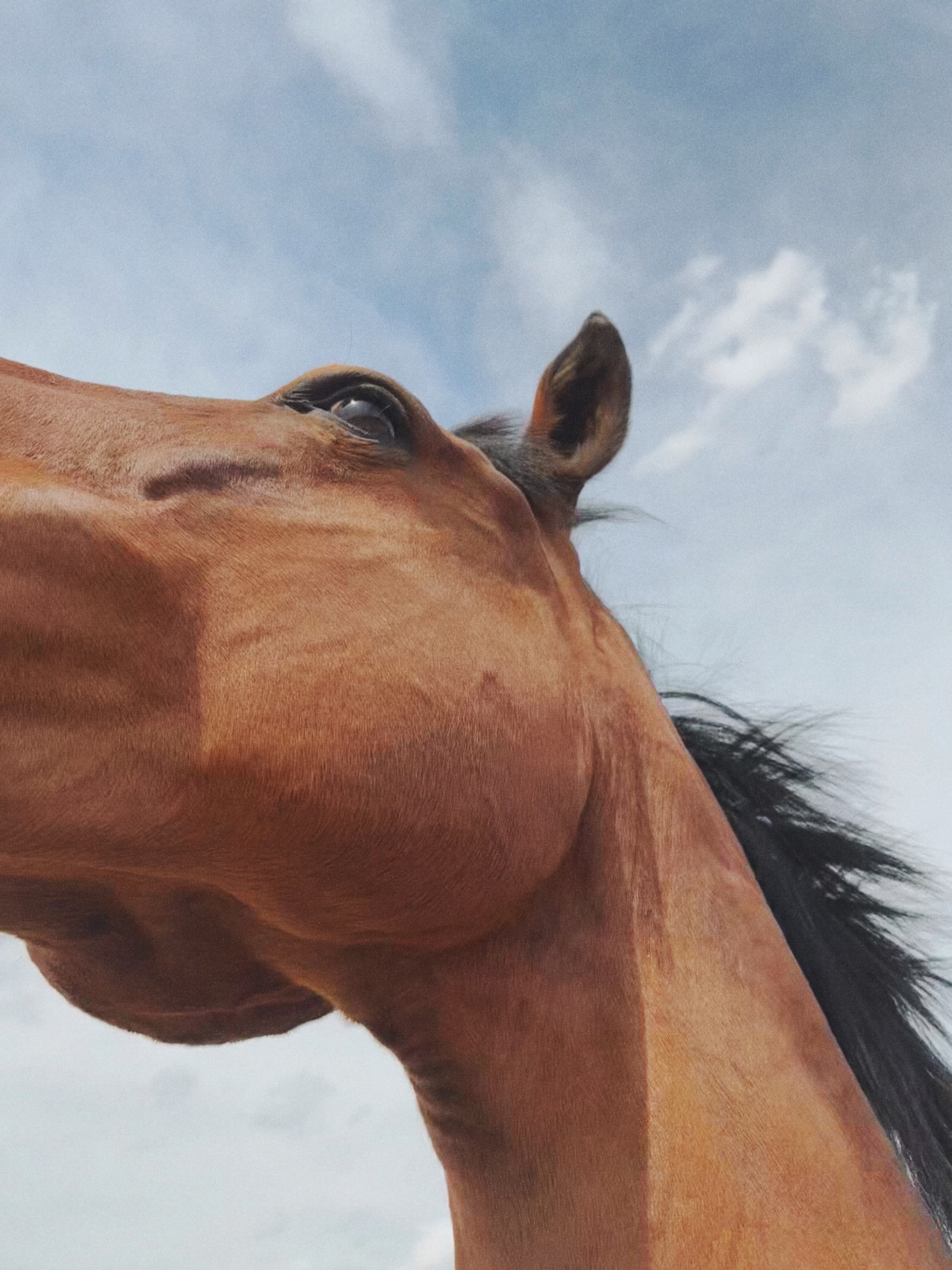
It’s labeled a “documentary” but mostly it is just a document of life and wonder. Equids and space, of other forms of intelligence and knowledge. Their big donkey ears like satellite dishes.
I am so glad that films like this get made.
I got on a plane and spent three days with my mother in the hospital, leaving only because I needed to come home and repack for my mother-in-law’s funeral. If you’ve ever been at someone’s hospital bedside, you know the days are spent hunting and gathering scraps of information…from doctors, overworked nurses, their assistants, the PT, the OT, and the social workers who have been euphemistically renamed The Care Team.
Mostly you are just there. I sat with my mom watching slow-motion waterfall videos with spa music soundtracks on what seemed to be the Hospital Healing Nature Network and telling her, over, over, over and over, why she has a bandage on her shoulder and that the pain meds should kick in soon. In our own ways, neither one of us knew what was happening.
Not knowing is most intimate.
Between the hospital and the funeral I have two days of turnaround, and yesterday I drove out to see the horses, listening to Michael Pollan’s A World Appears. I’m in the plant intelligence section and it is mind-blowing. (Ed Yong’s An Immense World does the same thing from a different angle).
I thought of all the other forms of intelligence I’ve encountered all week. The radio antennas of the observatories, the ears of equids, both filmed and actual. The first hummingbird that appeared in New Mexico the day before I flew to see my mom. The cacophony of frogs that accompanied me each night as I grief-walked from the hospital back to my parked rental car in the gloaming of the Pacific Northwest.
I thought about the Artemis II astronauts, and how my mother-in-law died while they were on their way to the moon. She is on her way to the moon. Time doesn’t feel linear so I can say my mother, in her hospital room, is also on her way to the moon, but moving along her own orbit, her trajectory more circuitous than any of us can chart.
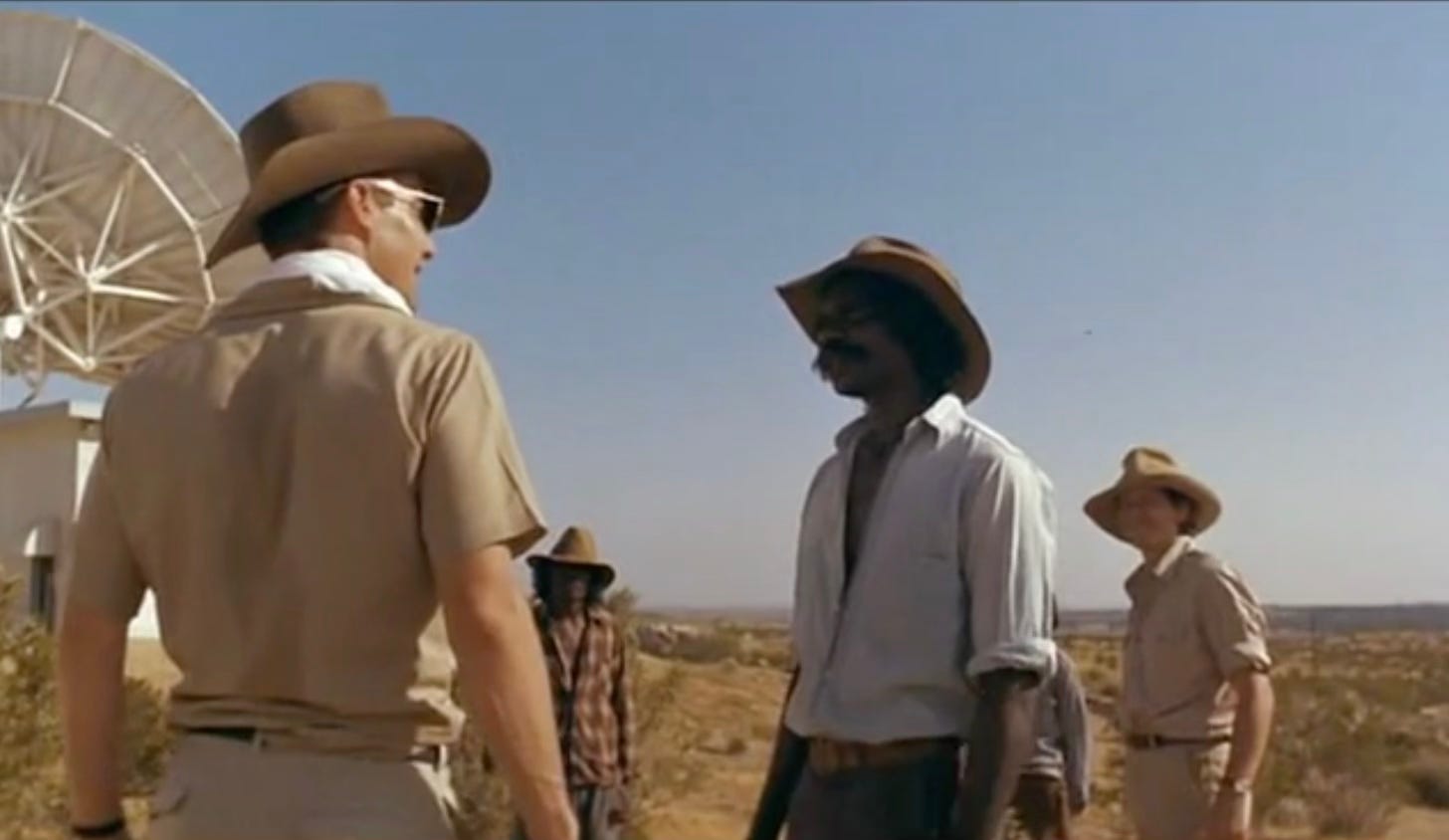
In one of my favorite films, The Right Stuff, there’s a scene where Dennis Quaid’s Gordon Cooper arrives in the Australian outback at the Muchea Tracking Station to talk with John Glenn’s Friendship 7 as he orbits overhead. He introduces himself to the locals.
“I’m an astronaut,” says Cooper. “A buddy of mine is getting ready to fly over, up in outer space.”
“Fly over? You blokes do that too?” says the indigenous Aboriginal man, played by David Gulpilil.
Cooper is incredulous. “Are you saying you do that too?”
“No not me, mate,” says the man. “See that old bloke there?” He points to an elder sitting nearby. “He know the moon. He know the stars. And he know the Milky Way. He’ll give you a hand.”
“Well, we’re sure gonna need all the help we can get.”
There are parts of this film that 40 years later we’d probably do differently, but this acknowledgment of other types of knowing was seeded in my ten-year-old brain in 1983. Something that connects the personal with the universal, something bigger than us.
Visible light covers less than 0.01% of the electromagnetic spectrum, and roughly 95% of the universe is dark matter and dark energy. We’re kidding ourselves if we think this is all there is.
… she also understood that creative endeavours once out in the world made their own way.
-Rachel Cattle, Uh Huh Her
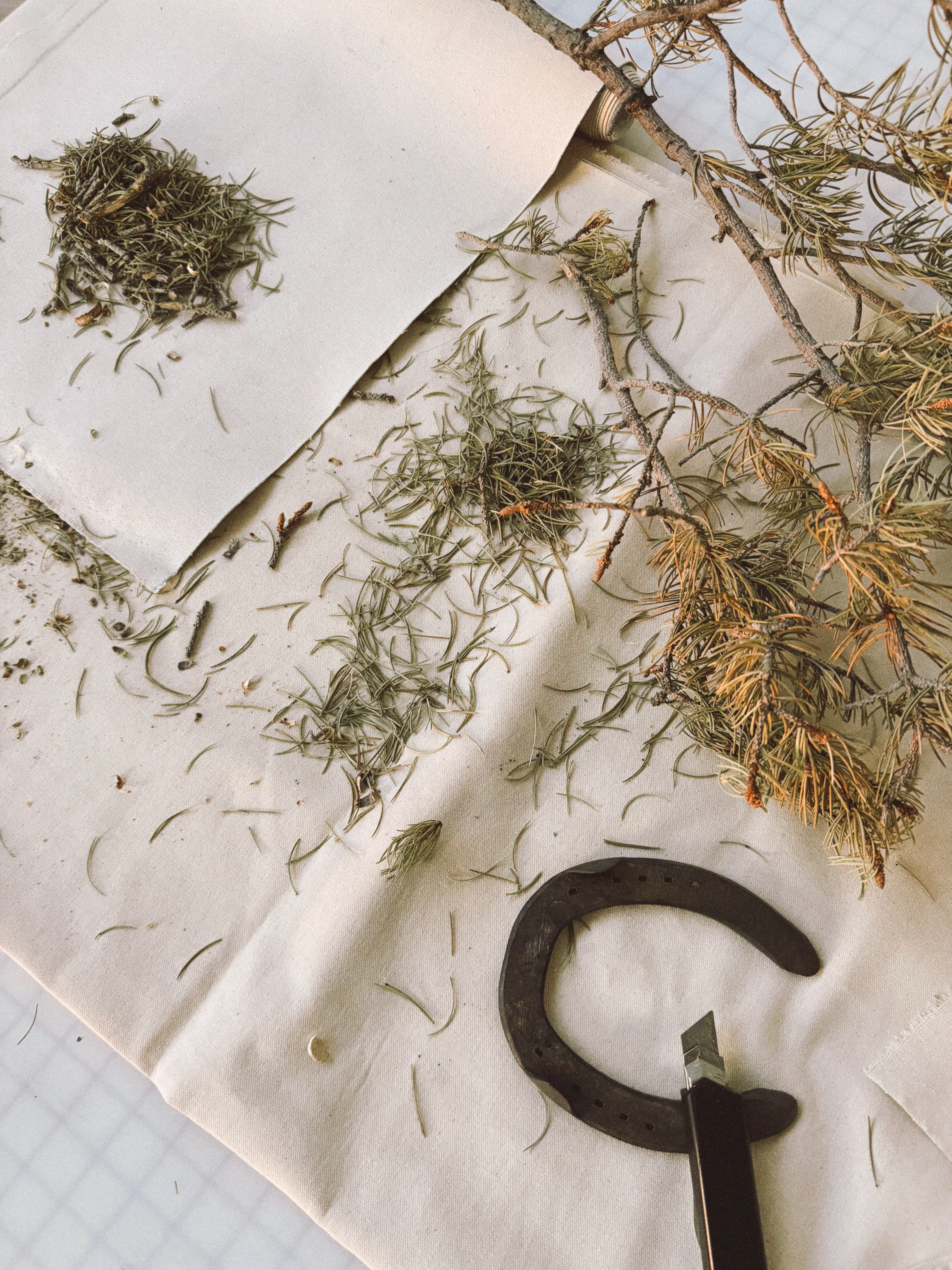
The studio felt foreign this morning, though not alienating. The fallen piñon branches I gathered after a storm last fall are still there, drying. I was just about to start their warm enfleurage when everything happened. The plan was to coax their resinous aromatic material out from under the bark and into an oil. Catch and release. Right now they look like frozen artifacts from a previous life.
I’ll get back to them soon. The process is what it is, slow and deliberate and on its own timeline. There is no other way to think of this. Believe me, I’ve tried.
More and more I think of all this like looking through a telescope, or a microscope, which is the same action in opposite directions, ultimately both making the invisible visible. The resin holds the tree’s memory, of the ground and the rain and the sky and the storms over the years. The warm oil will draw it out and transform it into scent, extracting what’s embedded into something not exactly knowable, but at the very least shareable, bridging plant and mineral and animal. A gesture, small as it is, toward something more expansive.
It’s an immense world. We need all the help we can get.
Thank you for being here.
Alia
This is so beautiful ❤️🔥. Thank you for your words, I needed them myself for different places right now.